

- Who We Are
- Our Work
- Who We Are
- Our Work
Rhino Conservation
Black and white rhinos had become locally extinct in the area before The Malilangwe Trust was formed. In 1997/8 conservation teams translocated 12 white rhinos and 28 black rhinos from South Africa to Malilangwe. After spending time settling in the bomas, the rhinos were released, and Malilangwe’s Scouts monitored their movements and general health. By the end of 1998, Malilangwe welcomed its first black rhino calf. Since then, countless calves of both species have been born, establishing thriving rhino populations on the reserve.
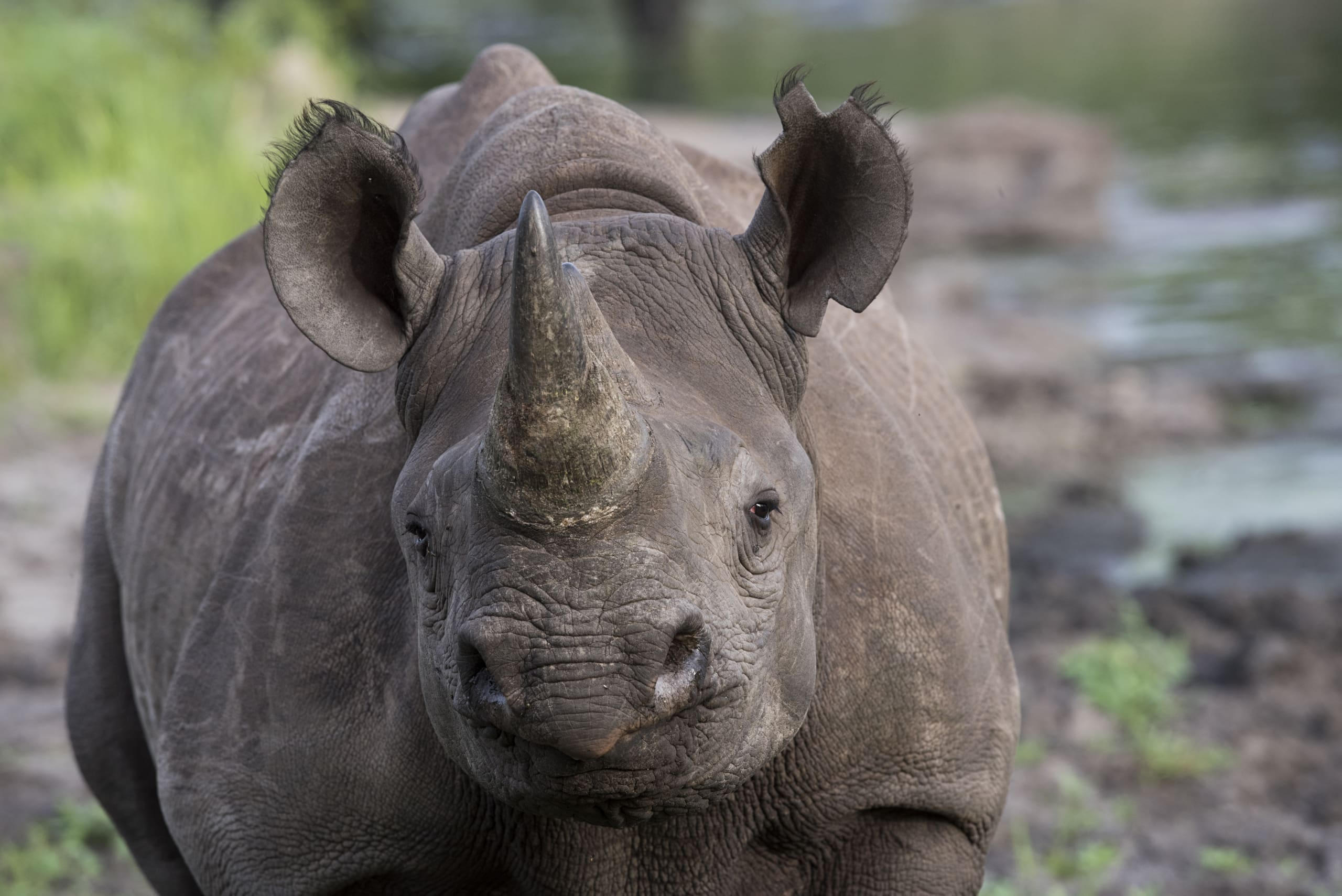
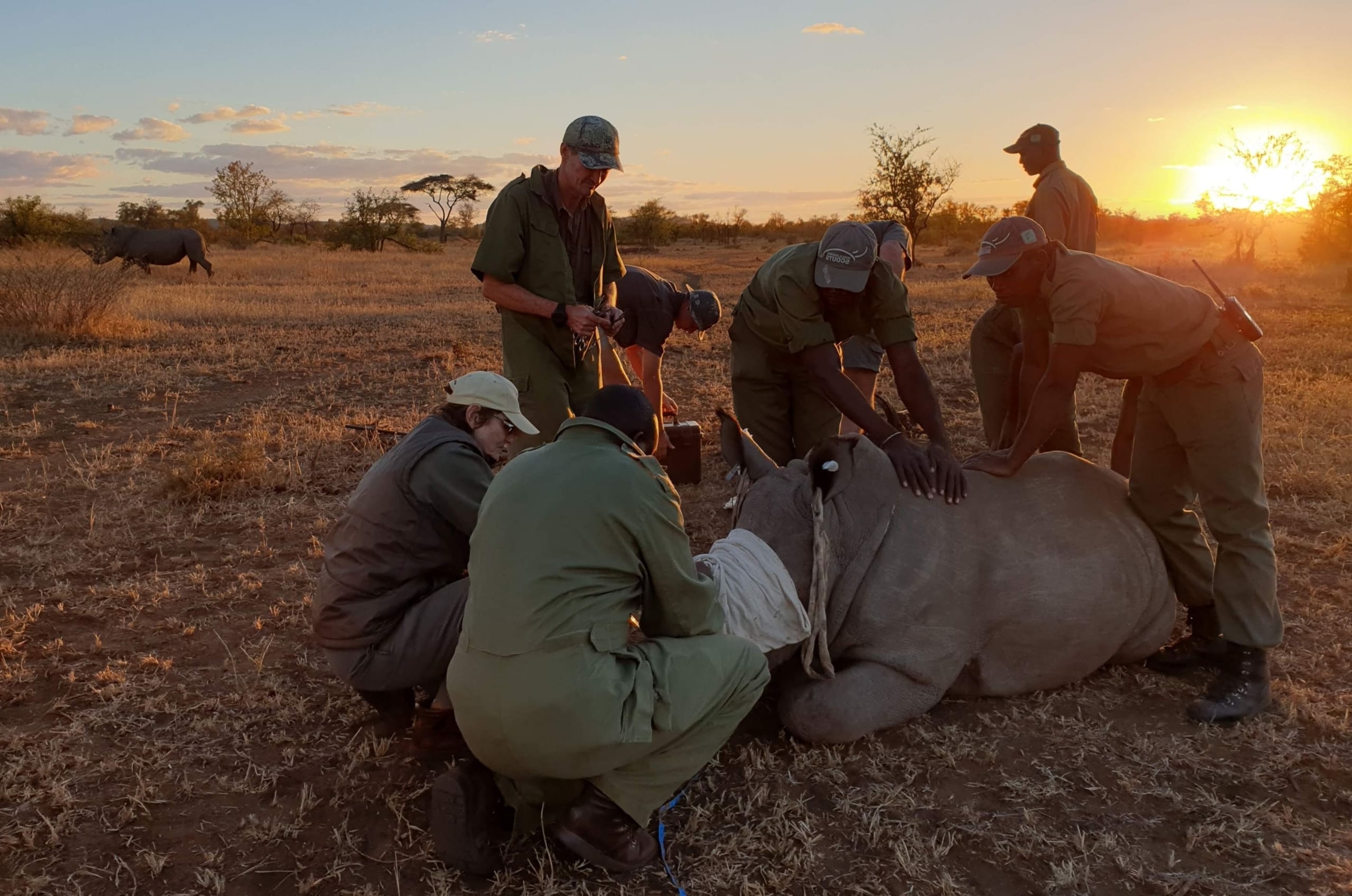
Understanding the dynamics of our rhino populations establishes the foundation of informed, science-based management. We ear-notch each rhino so that the notches correspond to a unique identification number, allowing scouts and wildlife managers to track every individual’s movement, behaviour and – for females – reproductive performance.
Scouts collect most of the rhino observation data as part of their combined security and wildlife monitoring duties. While on daily patrol, they record every rhino sighting. Sometimes they even copy the ear notch pattern onto leaves and later transfer the details into their sightings books. They document locations, behaviour, noteworthy events or observations and the details of other rhinos in the group. All of this information feeds into a custom-built database that now holds more than 25 years of detailed records. We can generate reports, run queries, and produce distribution maps from this system to guide scientific decision-making. By understanding the lineage or each animal, we can select animals as founder populations for other conservation areas.
One factor contributing to Malilangwe’s success is the reserve’s nutrient‑rich soils, which provide highly nutritious forage for both black and white rhinos. Both rhino species have now reached densities that allow Malilangwe to supply and restock suitable protected areas elsewhere in Africa.
Rhino conservation remains complex and expensive, but the effort is invaluable for ensuring the long‑term survival of the species.
How can you help?
Donate to rhino protection and monitoring expenses, costing US$750,000 a year.
Donate today

- Our Work
- Our Work