

- Who We Are
- Our Work
- Who We Are
- Our Work
Predator Population Regulation
In fenced reserves such as Malilangwe, predators – particularly lions – have the capacity to drive prey populations into decline if their numbers are allowed to increase beyond sustainable levels.
Lions
The theoretical carrying capacity of lions at Malilangwe was figured between 24 and 29 in 2003, but is believed to be closer to 35 today. Low density prey species (e.g. sable) are the most vulnerable to lion-induced declines. A 2013 study used population viability modelling to show that sable numbers would decline at Malilangwe if lion numbers increased beyond 35.
Our own research into lion diet reinforces why managing these dynamics matters. Using GPS-collar data alongside field-located kill sites, we found that lion diet is highly flexible: when one prey species becomes scarce, lions simply shift their hunting effort onto whatever else is available. This was demonstrated clearly when a major anthrax outbreak sharply reduced several prey species, prompting a measurable shift in lion prey selection toward less-affected species such as warthog, zebra, wildebeest, and eland. This adaptability is what makes low density antelope vulnerable, but it also points to a management lever: because a single buffalo yields so much meat, a robust buffalo population can sustain lions largely on its own, and where buffalo are plentiful they act as a buffer that shields other plains game from significant lion predation. Maintaining a healthy buffalo population is therefore one means of protecting vulnerable species. To further safeguard viable populations of the low density antelope species, groups of lions are also periodically captured on Malilangwe and translocated to other conservation areas.
Other Predators
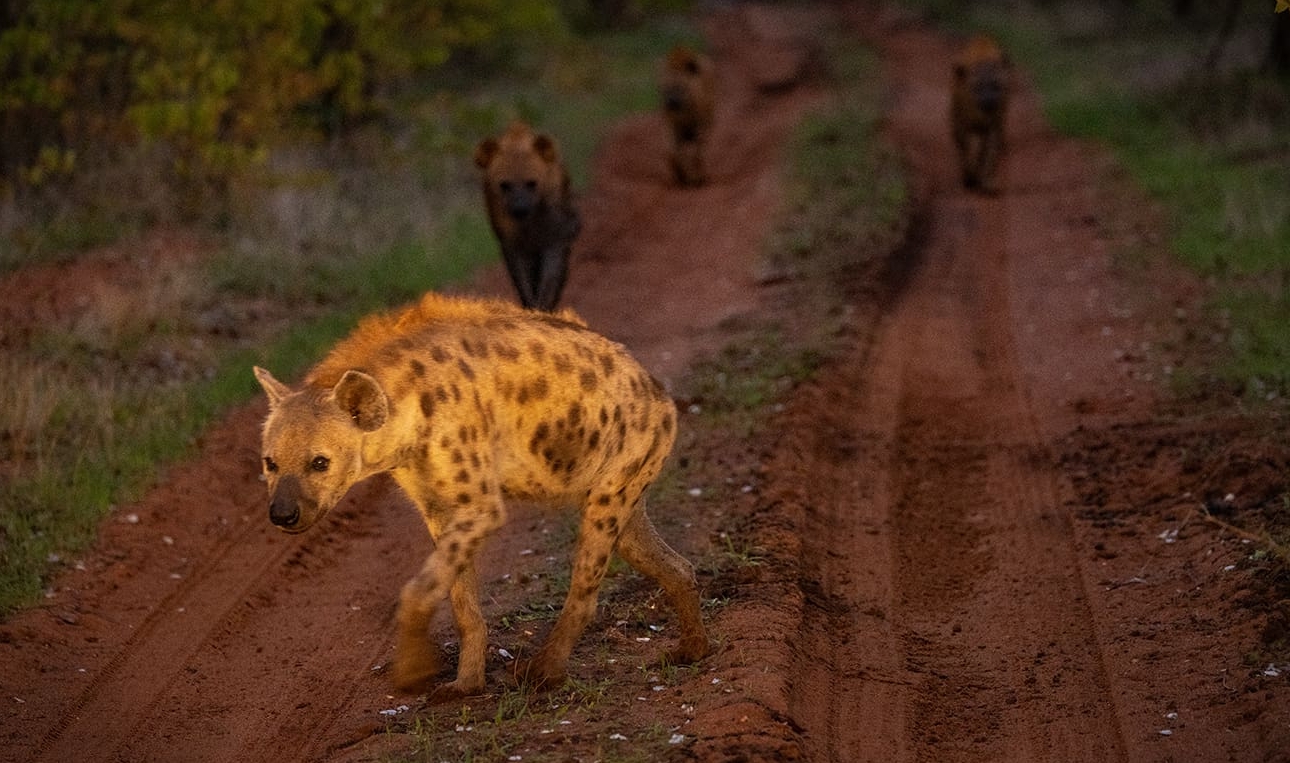
We have not needed to manage the populations of other predators, such as leopard, hyena and wild dog. Their populations are kept in balance by competition for food by other predators as well as fighting (particularly among leopards) and infanticide within their own species.


- Our Work
- Our Work