

- Who We Are
- Our Work
- Who We Are
- Our Work
Large Predators
Counting predators is a notoriously difficult exercise. Because they are cryptic, largely solitary, and often nocturnal, predators cannot be reliably counted from the air in woodland or savanna environments, and traditional ground methods such as spoor counts, scat counts, and call-up surveys tend to produce less robust, less reliable estimates (Funston et al. 2010; Stander 1998). So, to monitor our predators accurately, we combine several approaches including baited-camera trapping (BCT), GPS collaring, and known group counts.
Leopard
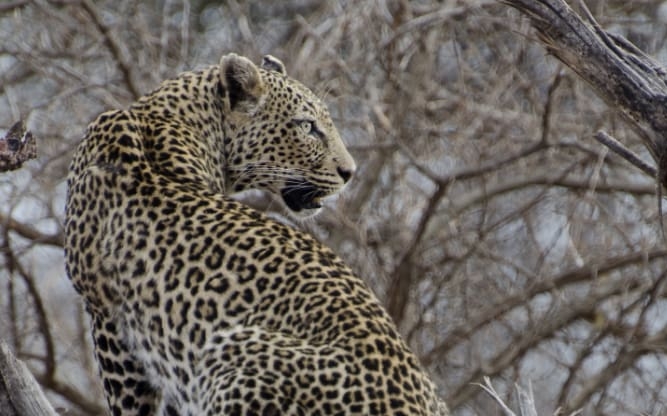
Leopards are arguably the most elusive of Africa’s large carnivores. We estimate their numbers using the Baited-Camera Trapping (BCT) method developed in Save Valley Conservancy and tested here at Malilangwe. Each leopard carries a unique pattern of rosettes, and a leading-pole setup aligns the animal so that a single camera reliably photographs its right flank, allowing individuals to be told apart and their sex determined from the images. These capture histories are then run through capture-recapture analysis to estimate the population. The 2017 census, using 210 baited stations across the reserve, recorded 61 individual leopards (95% confidence interval 61 to 67), at a density of about 0.12 leopards per km². At full survey effort, the method detected essentially every leopard present, giving us high confidence in the count. Our latest BCT study was conducted in 2022 and estimated our leopard population at 59 individuals (95% confidence interval 55-70).
Spotted Hyena
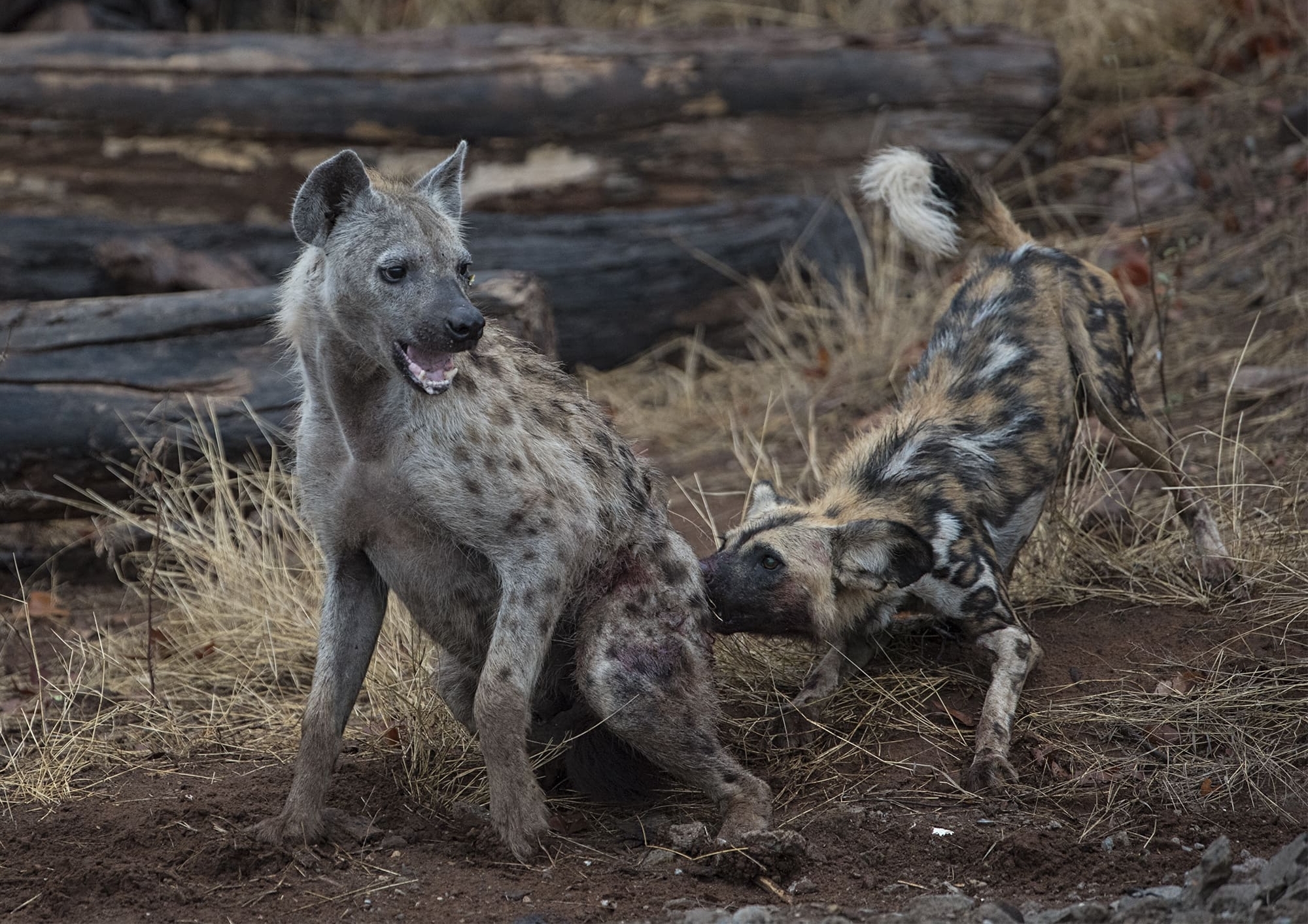
Spotted hyenas play a dual role as both predator and scavenger. Although hyaenas operate as a clan at the den, they split up to hunt and rarely allow group sizes to be judged from casual sightings. Due to this, we have chosen to estimate their population size the same way we do leopards: spotted hyenas carry unique spot patterns that allow individuals to be identified from camera-trap photographs. Using images of hyenas captured during the leopard BCT survey, we derived a population estimate through capture-recapture analysis. This 2022 BCT census estimated the reserve’s spotted hyena population at roughly 72 animals (95% confidence interval 63-92).
Wild Dog
Wild dogs are also monitored largely through known group counts and supplemented by spoor counts. Our latest census conducted in 2024 recorded 35 individuals. The population is comprised of three known packs, one of 17 dogs, one of 11 dogs, and one of 7 dogs.
Lion
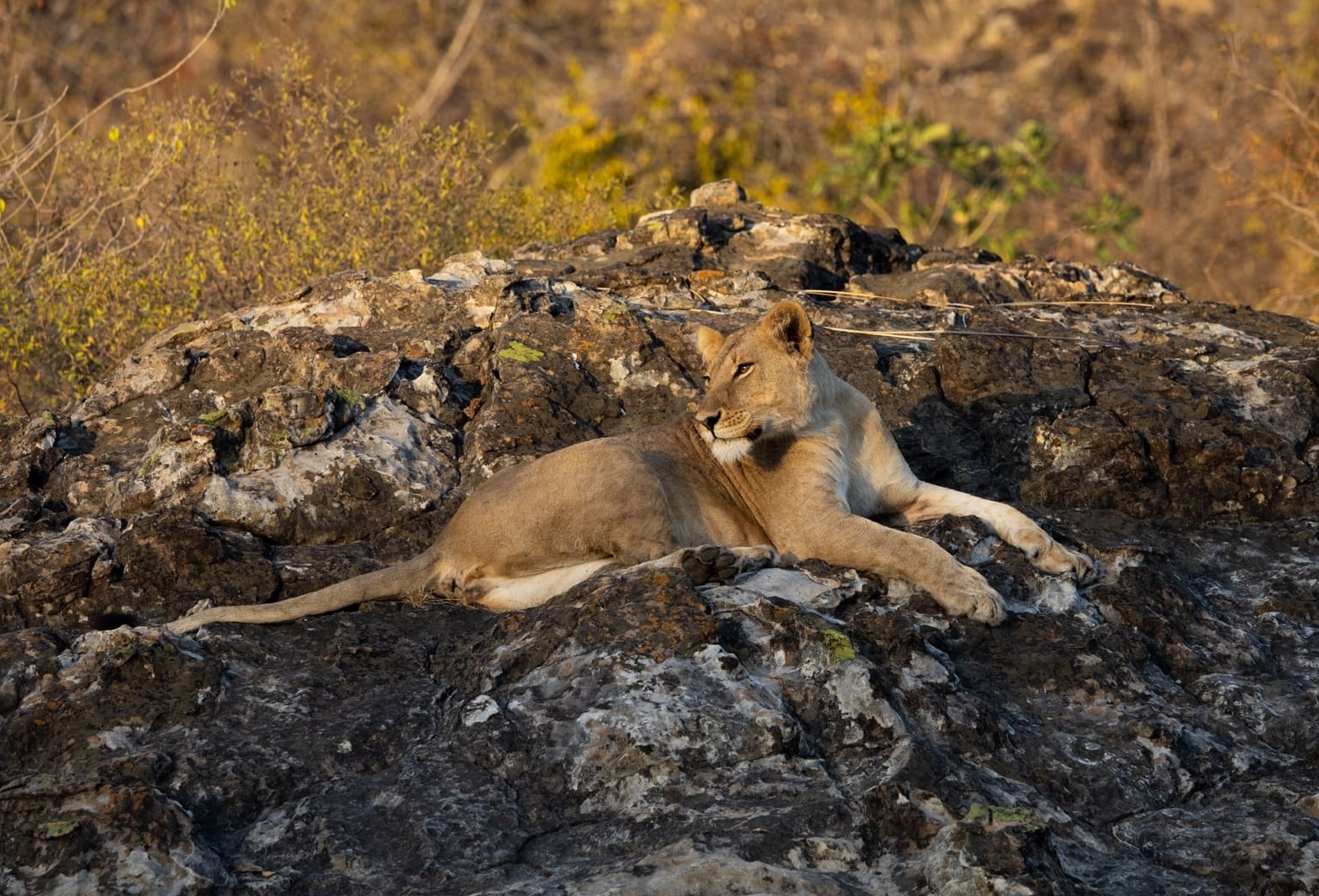
Thanks to our dedicated lion tracking team, we know our exact lion count. Numbers are determined through the trackers’ continuous monitoring of the three prides present on Malilangwe and supplemented by spoor counts. There are 33 lions present on the reserve today.
Rarer Species
From the 2022 leopard survey, we were able to model the habitat use of two understudied species: brown hyena and African civets. Both species’ distributions overlapped with those of the top predators, suggesting they have adapted to coexist with larger carnivores, with water availability and cover shaping where they range. From this study, brown hyena numbers were estimated at around 18 individuals (9-37, 95% confidence interval) and civet numbers were estimated at 59 individuals (43-82, 95% confidence interval).

- Our Work
- Our Work